
In Vitro Research Tools with True In Vivo Relevance
BMSEED helps researchers generate more physiologically relevant data by integrating biomechanics, electrophysiology, imaging, and microfluidics into advanced in vitro research platforms. Designed to better predict in vivo behavior and accelerate discovery.
Research Applications Include:
Neurotrauma & Concussion Research
Mechanobiology Research
Tissue Engineering & Regenerative Medicine
Drug Discovery & Therapeutic Screening
Human Cell, Organoid & Organ-on-Chip Research
Trusted by Leading Research Institutes Since 2014

Why Researchers and Scientists Choose BMSEED
More Physiologically Relevant Data
Replicate the natural mechanical and electrical environment experienced by cells in vivo.
Reduce Experimental Complexity
Perform biomechanics, imaging, and electrophysiology using a single integrated platform.
Improve Drug Screening Accuracy
Identify ineffective drug candidates earlier and improve preclinical decision-making.
Real-Time Functional Monitoring
Capture electrophysiological signals during mechanical stimulation events.
Advanced Organoid Research
Enable 3D electrophysiological interrogation of physiologically intact brain organoids.
Our Technology and Solutions for You
Utilize our integrated platforms for advanced biomedical research. Modules can be purchased individually.
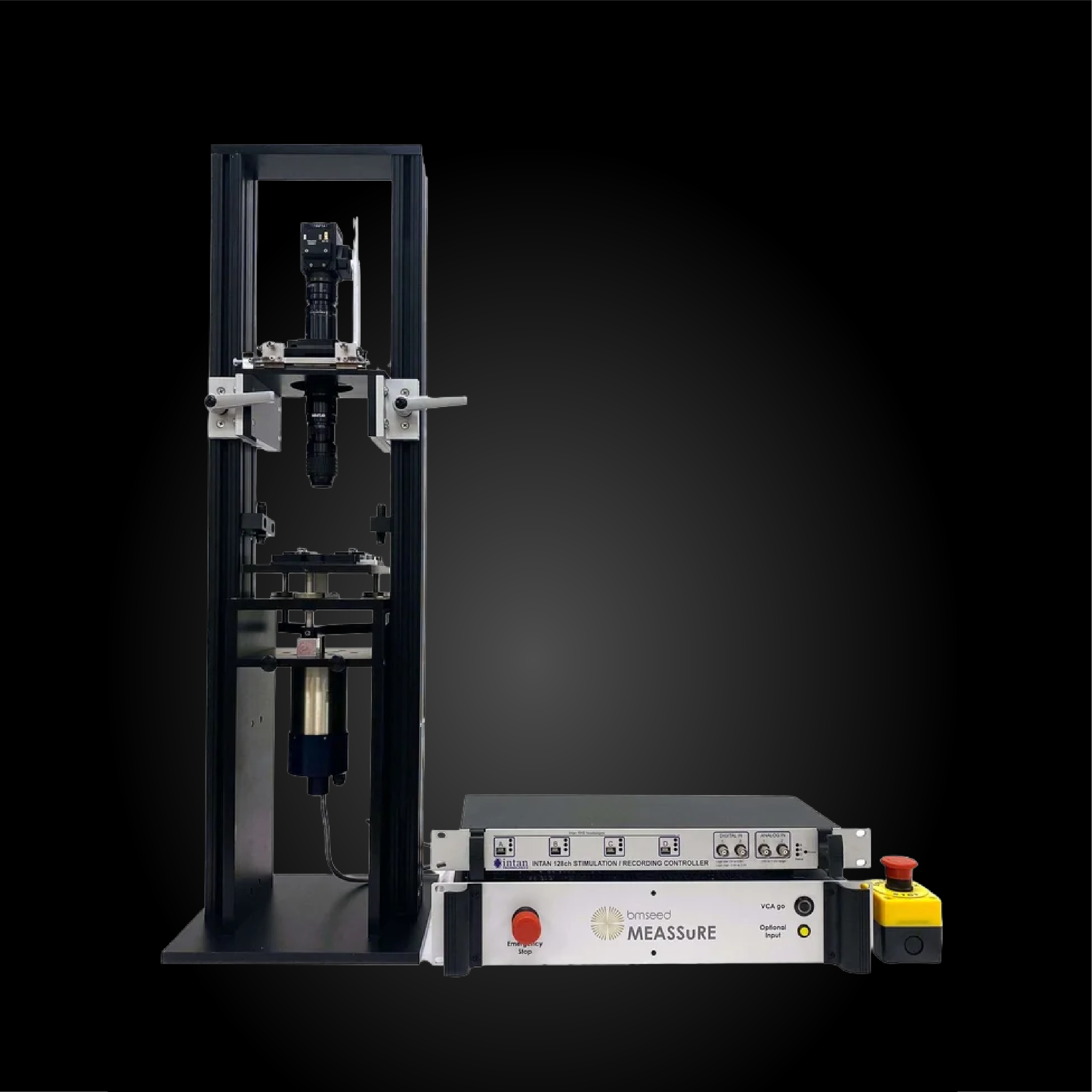
MEASSuRE Platform
Biomechanics + Electrophysiology + Imaging in One System
Mechanical stimulation
Live imaging
Real-time electrophysiology
Simultaneous or independent operation
Modular and customizable
Single-well and 6-well formats
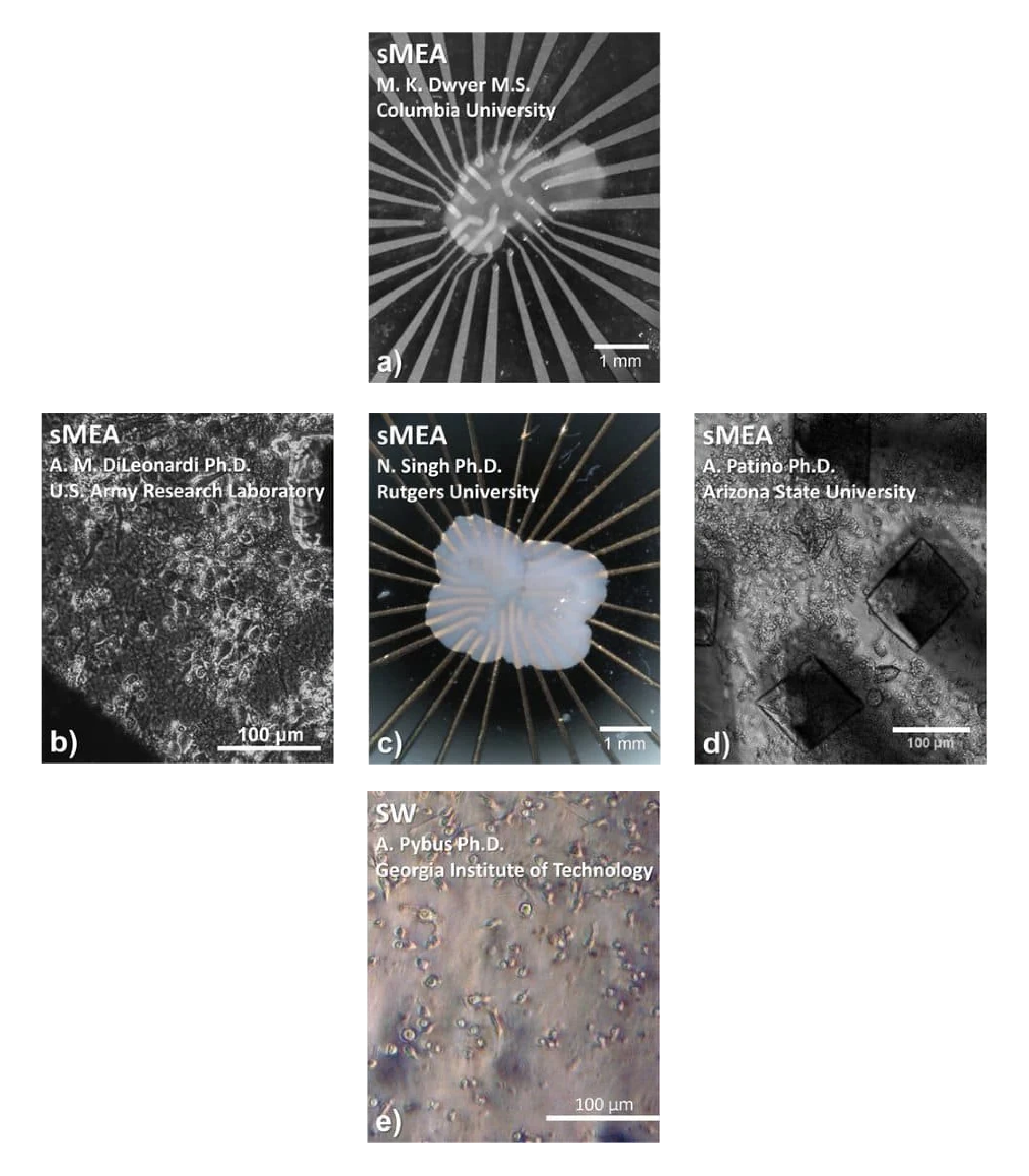
Stretchable Multielectrode Arrays (sMEAs)
The Foundation of Physiologically Relevant Electrophysiology
Stretchable electrodes that move with the cells
Real-time recording under dynamic strain
Recording and electrical stimulation
Mimics in vivo biomechanics
Pathological and physiological stretch
Soft, physiologically relevant microenvironment
Multielectrode Arrays (MEAs)
Industry-Leading MEA Portfolio
Traditional glass-substrate MEAs
Soft and stretchable MEAs
Organoid/ Pocket MEAs
Microfluidic MEAs
Up to 120 channels
Supports 2D, 3D cultures and organoids
Microfluidic Platforms
Advanced Disease Modeling for Neurological Research
Alzheimer's Disease
Parkinson's Disease
Traumatic Brain Injury
Neurodegenerative Disease Research
Drug Screening

Download the BMSEED Product Guide
Explore Our Complete Product Portfolio and Applications
Peer-Reviewed Publications: Results You Can Trust

Long-Term Potentiation and Long-Term Depression Are Both Impaired After In Vitro Stretch Injury Measured with Stretchable Microelectrode Arrays
Functional Impairment Identified Despite Normal Activity Levels
Researchers observed significant neurological dysfunction even when standard firing-rate measurements showed little change.
Results:
Mechanical stimulation
Live imaging
Real-time electrophysiology
Simultaneous or independent operation
Supports 2D, 3D cultures and organoids
Why It Matters:
BMSEED technology provides a more sensitive method for detecting injury-induced functional changes in neural networks.
Monitoring Hippocampus Electrical Activity In Vitro on an Elastically Deformable Microelectrode Array
Record From the Same Tissue Before and After Injury
Unlike conventional rigid electrode systems, BMSEED's stretchable microelectrode arrays deform with biological tissue.
Results:
Continuous recording before, during, and after injury
Same-sample analysis reduces experimental variability
Improved statistical power and data consistency
Eliminates the need to compare separate tissue samples
Why It Matters:
Researchers can directly observe functional changes caused by injury within the same biological sample.

NTS-105 Decreased Cell Death and Preserved Long-Term Potentiation in an In Vitro Model of Moderate Traumatic Brain Injury
51.7-Point Reduction in Synaptic Plasticity Detected
Researchers used BMSEED's stretchable microelectrode technology to measure long-term potentiation (LTP), a critical marker of learning and memory.
Results:
LTP decreased from 48.1% to -3.6% following moderate traumatic injury
51.7 percentage-point decline in synaptic plasticity
Statistically significant (p < 0.01)
Why It Matters:
Traditional viability assays may indicate cells remain alive, while BMSEED technology can reveal hidden functional deficits affecting neural performance.
Talk with a Research Specialist
Our Team Can Help Identify the Right Solution for Your Research
-
The cost of MEASSuRE and stretchable multielectrode arrays (sMEAs) varies based on system configuration, performance requirements, and customization. Because BMSEED platforms are modular and application-driven, pricing is tailored to match your specific research goals.
The cost of a MEASSuRE system depends on several key factors:
1. Strain & Strain Rate Requirements
Different models (Mini, Premium, X) support varying levels of:
Maximum strain
Maximum strain rate
Stretch waveform complexity
Injury-level performance
Higher strain rates and advanced trauma modeling capabilities require enhanced mechanical components and control systems.
2. Electrophysiology Configuration
Pricing varies depending on:
Number of recording channels
Stimulation capability
Data acquisition hardware
Real-time analysis tools
Integration with existing lab equipment
3. Imaging Capabilities
Live-cell imaging configurations may include:
Brightfield only
Fluorescence imaging
High-resolution objectives
Camera sensitivity and frame rate
Software integration
Customized Solutions for Your Research
Because every laboratory has unique requirements, BMSEED works directly with researchers to:
Match system performance to application needs
Avoid unnecessary features
Optimize budget allocation
Provide scalable solutions for future expansion
Contact us for a consultation or quote. Email: info@bmseed.com, Phone: +1 (609) 532-9744
Please include information about your desired strain parameters, electrophysiology requirements, imaging needs, and anticipated sMEA usage volume. Our team will provide a customized proposal tailored to your research objectives.
-
The overall goal of the MEASSuRE platform is to improve how results from in vitro models translate to in vivo behavior. By recreating controlled mechanical environments while simultaneously measuring functional outcomes, MEASSuRE bridges the gap between simplified cell culture systems and complex physiological conditions.
MEASSuRE enables researchers to apply:
Physiological stretch using the Mini model
Pathological or injury-level stretch using the Premium and X models
By integrating biomechanics, electrophysiology, and imaging into one synchronized system, MEASSuRE helps you generate more physiologically relevant data, reduce experimental variability, and accelerate translational discovery.
A More Predictive In Vitro Model: Traditional in vitro systems often lack mechanical relevance, limiting their translational value. MEASSuRE addresses this by:
Applying controlled radial or linear strain
Delivering high strain rates for injury modeling
Allowing repeated stretch–relaxation cycles
Maintaining precise and reproducible deformation profiles
This enables more realistic modeling of conditions such as:
Traumatic brain injury
Cardiac overload and arrhythmias
Pulmonary stretch injury
Mechanotransduction-related disorders
-
MEASSuRE is BMSEED’s fully integrated, plug-and-play platform that combines cell mechanics, electrophysiology, and live-cell imaging into one synchronized research system. Designed for advanced mechanobiology and electrophysiology studies, MEASSuRE enables researchers to apply controlled mechanical strain to cells while simultaneously recording electrical activity and capturing high-resolution optical/fluorescence data.
-
Stretchable multielectrode arrays (sMEAs) are BMSEED’s proprietary consumable devices designed specifically for use with the MEASSuRE system. Unlike traditional rigid glass MEAs or merely flexible arrays, sMEAs provide a soft, elastic, and physiologically relevant mechanical environment for in vitro studies.
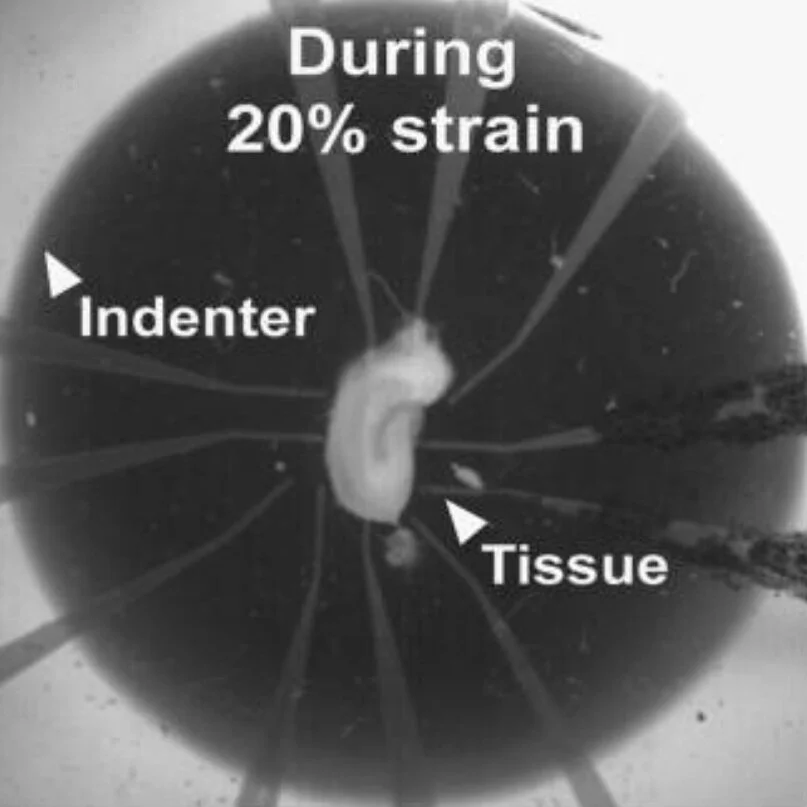
sMEAs are engineered to support simultaneous mechanical stimulation and electrophysiological recording, enabling researchers to study how cells respond electrically to physiological or pathological stretch. Tissue slices or dissociated cell cultures can be stretched by pulling the silicone substrate of the sMEA with the embedded microelectrodes over an indenter. The electrodes stretch with the tissue, thus being able to record electrophysiological activity before and after stretching from the same location, pre- and post-stretch.
Stretchable microelectrode arrays for in vitro electrophysiology under dynamic mechanical strain are available exclusively from BMSEED. By mimicking the dynamic environment in vitro and combined with high-quality electrophysiological recording, sMEAs enable in vitro research with unprecedented physiological0 relevance.
-
sMEAs (electrodes) and SWs (no electrodes) can be re-used if proper cleaning protocols are followed. Contact BMSEED for proper cleaning protocols for each cell type.