
Organoid Multielectrode Arrays
MultiElectrode Arrays are Consumables for MEASSuRE: View Catalog
BMSEED’s organoid multielectrode arrays (pMEAs) are designed for research with organoid, allowing accurate electrophysiological recording and stimulation on a stretchable silicone substrate. The system includes a 3D pocket to hold organoids, maintaining shape for enhanced physiological relevance and synchronized network measurements. Customizable in size (1-5 mm diameter, 0.3 to 1.5mm depth), the pocket supports various organoid types. .
In Vitro Research
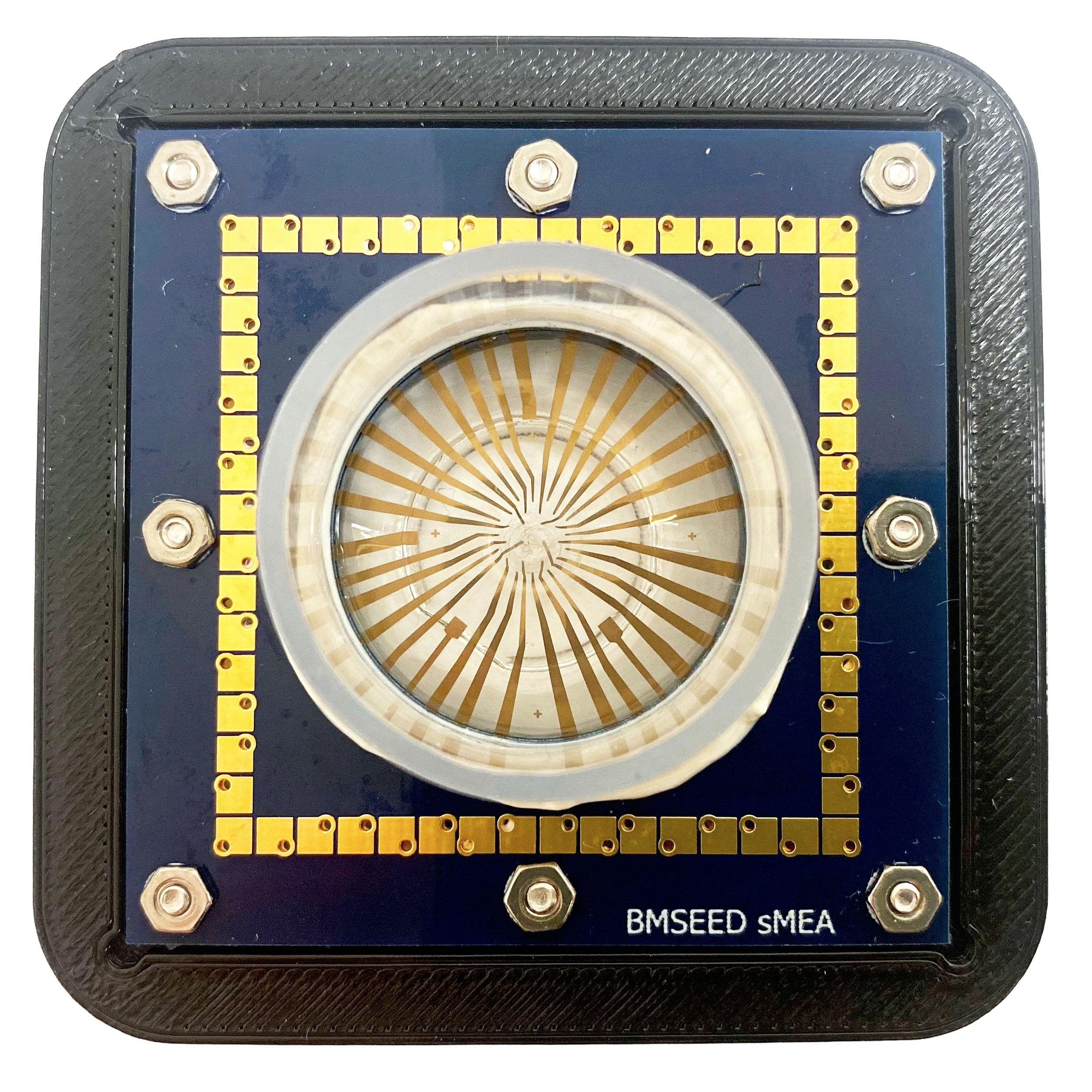
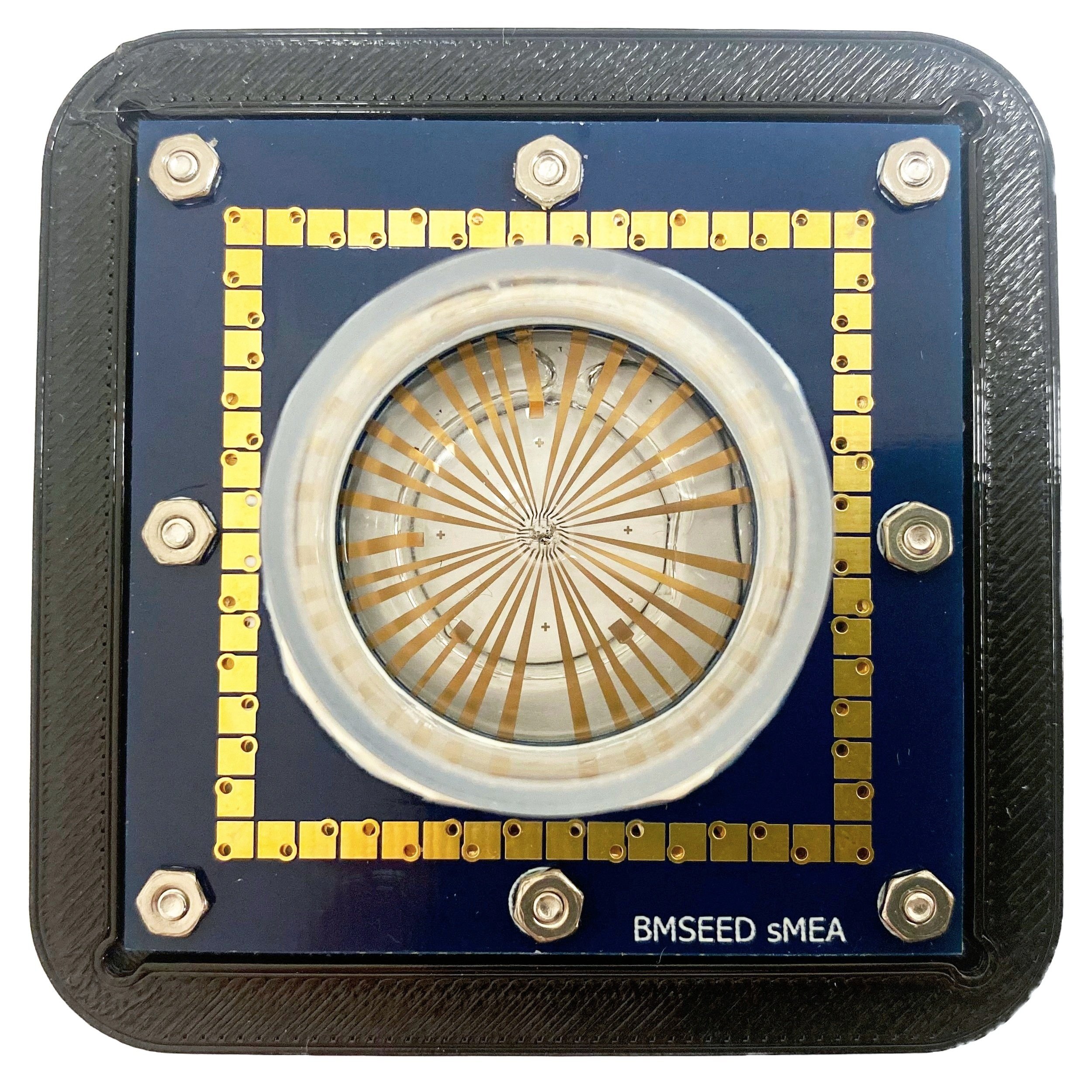
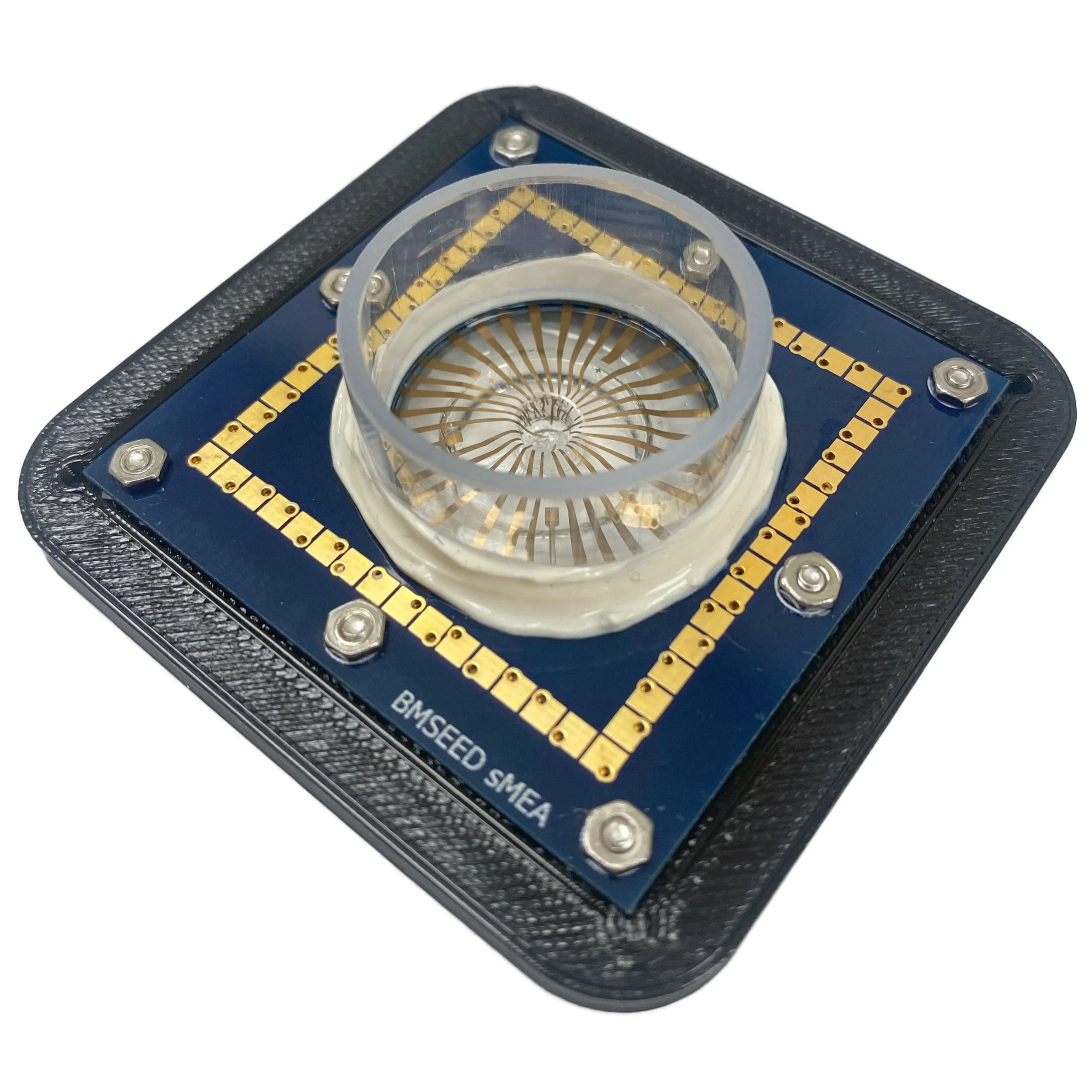
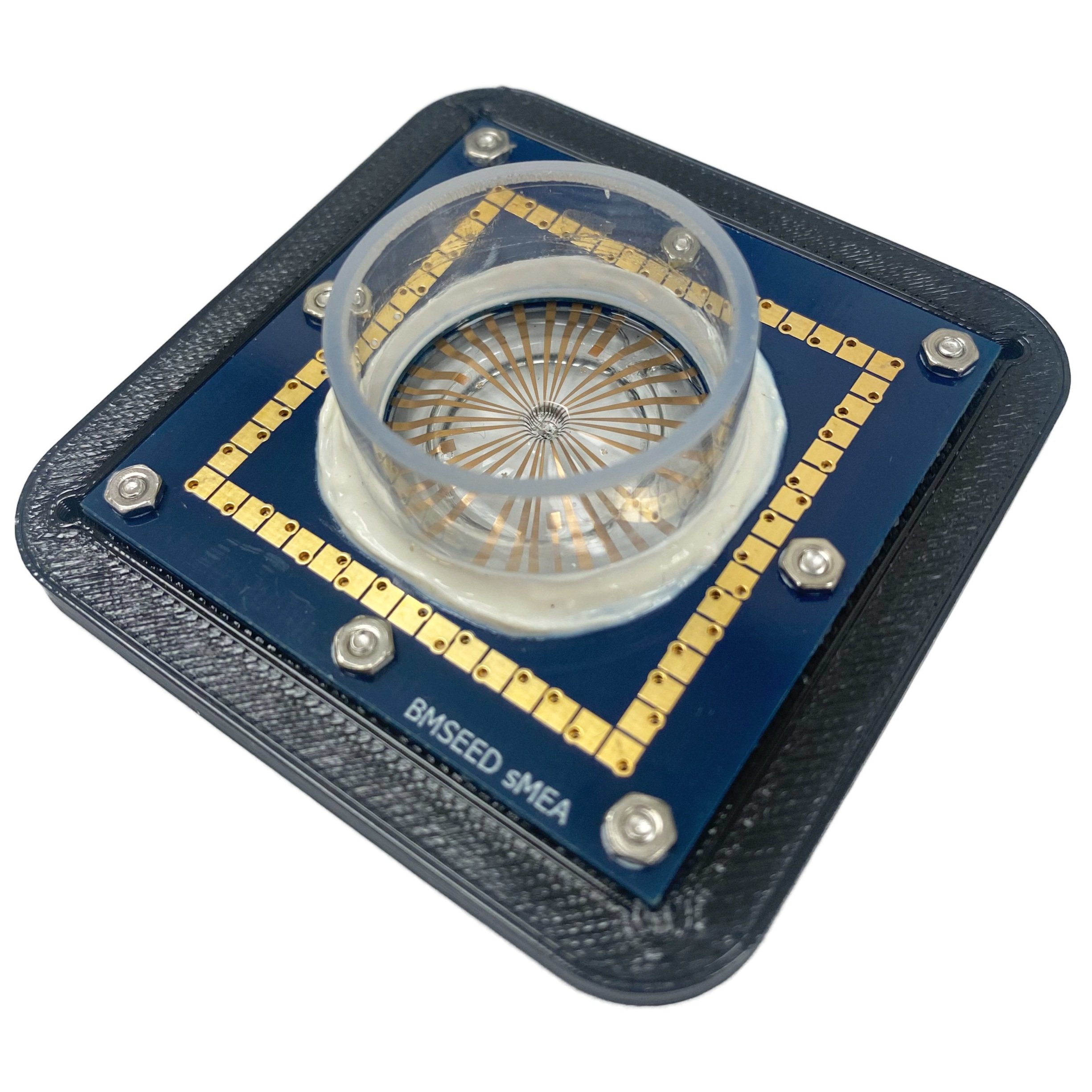
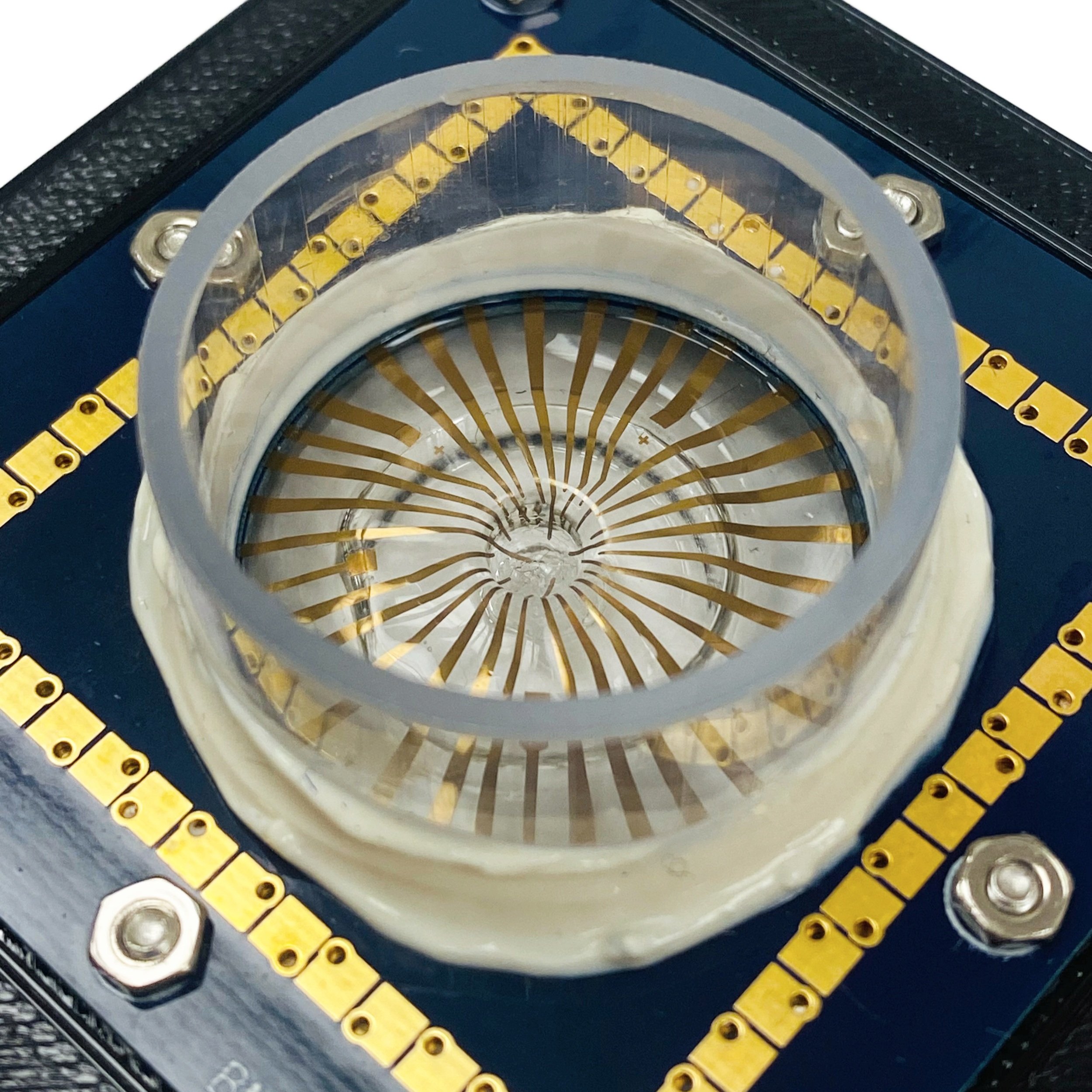
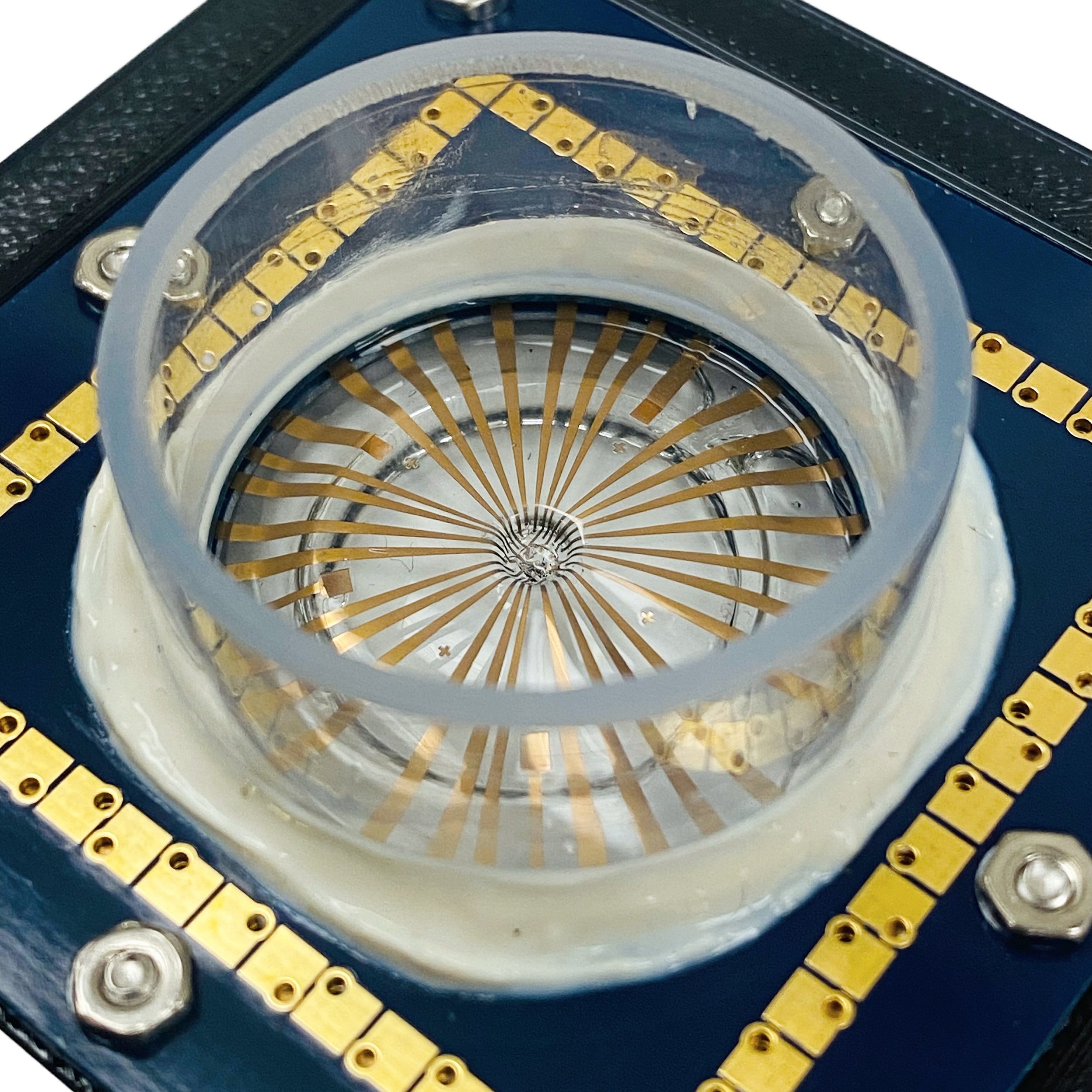
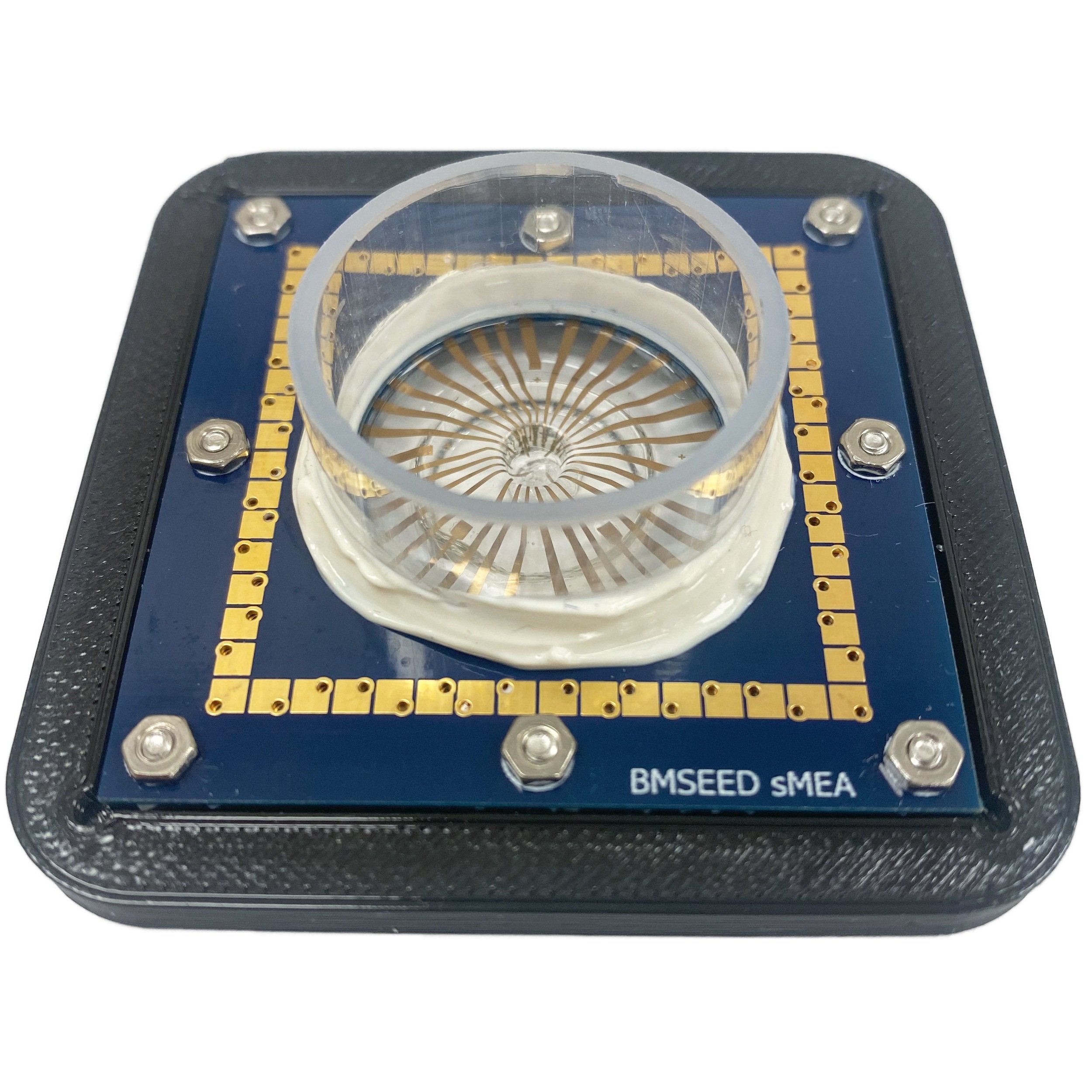
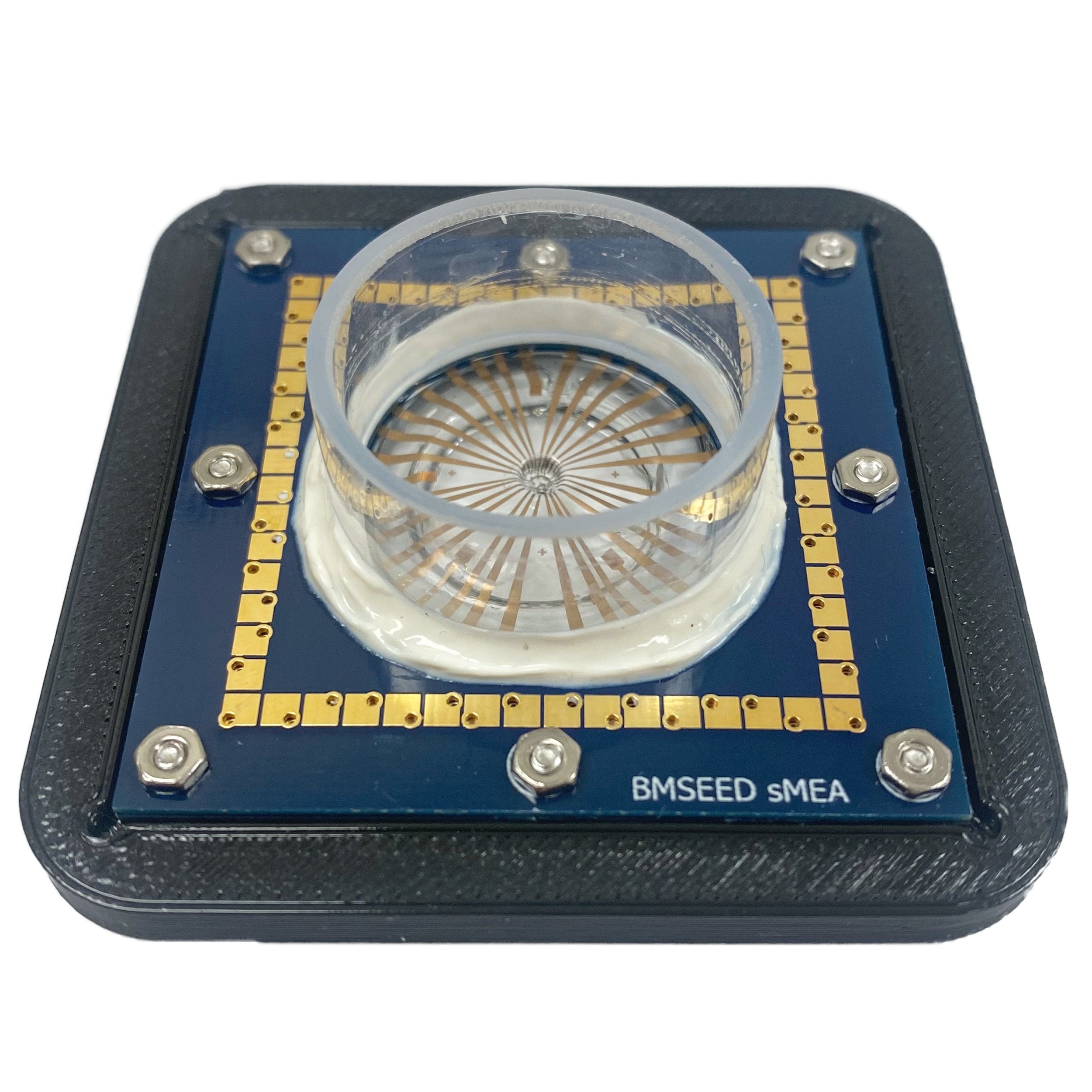
32pMEA-100-400-4iR-Au-1W and 60pMEA-100-420-4iR-Au-1W
Organoid MEA: Stretchable multielectrode array with fixed 3D Pocket
Features and Benefits
organoid does not remodel in pocket
retain organoid shape
increased physiological relevance
recording from a large surface area of the organoid
more accurate network synchronization measurements
recording & stimulation of electrophysiological activity
silicone substrate & pocket
customizable pockets: 1-5 mm diameter, 0.3-1.5 mm depth
customizable electrode layouts
product number (PN): 11-53100 (32-channel), 11-53200 (60-channel)
discounted units available for early adopters
Stretchable microelectrode array with 3D pocket for organoid research
Image (lower left): cerebral organoid in BMSEED’s sMEA with 3D pocket, J. Guo, Emory University
Cell Cultures: stretchable multielectrode array with microchannels for neural axon growth
promote structured neuronal networks with axonal guidance to study how neuronal structure correlates to function
recording & stimulation of extracellular electrophysiological activity
elastically stretchable (silicone) substrate & microstructures
customizable patterns & number of electrodes
Image (right): cortical rat neurons seeded in BMSEED’s sMEA with microchannels, ETH Zurich.